
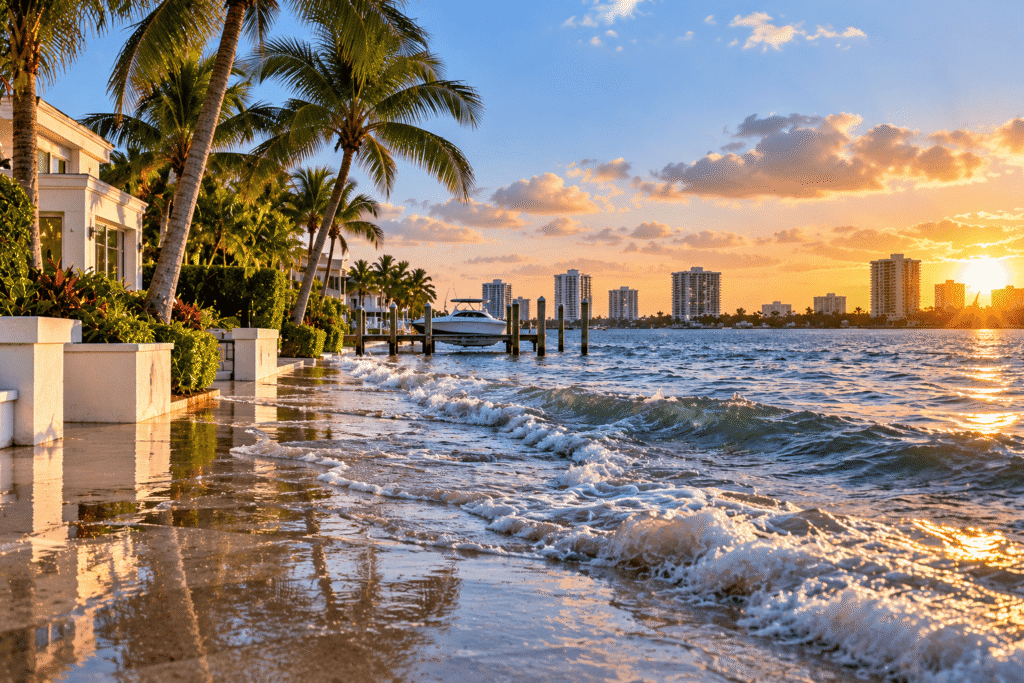
Living in Boca Raton comes with plenty of perks, from beautiful beaches to waterfront neighborhoods and year-round sunshine. But if you own a home in South Florida, there is one seasonal concern you should never overlook: king tides and coastal flooding.
During certain times of the year, unusually high tides can affect low-lying streets, waterfront properties, driveways, and drainage systems. Sometimes, flooding happens even when the weather is sunny. Add heavy rainfall or strong coastal winds, and the risk can increase.
For homeowners, preparing ahead of time can make a real difference. A little maintenance, a better understanding of your property’s flood risk, and a few practical precautions can help protect your home and belongings.
Whether you live near the beach, along the Intracoastal Waterway, or in an inland Boca Raton neighborhood, here’s how to prepare your home for king tides and coastal flooding.
King tides are exceptionally high natural tides that occur during certain periods of the year. In South Florida, they are most commonly associated with the fall season.
These tides occur because of the combined gravitational effects of the moon and sun. Local weather conditions, wind direction, and other factors can also influence water levels.
In Boca Raton, king tides may contribute to temporary flooding in low-lying areas, particularly near canals, coastal roads, and waterfront properties.
However, not every high tide causes flooding. The impact depends on your property’s elevation, drainage conditions, proximity to waterways, and local weather.
Understanding these factors is the first step toward protecting your home.
Before spending money on flood protection, find out how vulnerable your property may be.
Homes near the Intracoastal Waterway, canals, and other low-lying areas may face greater exposure to coastal flooding. However, properties farther inland can also experience flooding because of heavy rainfall or drainage problems.
Start by checking your property’s location on the official FEMA Flood Map Service Center.
You should also review local flood information provided by Palm Beach County and the City of Boca Raton.
Pay attention to areas where water has collected during previous storms or unusually high tides. Your driveway, garage entrance, backyard, and ground-floor storage areas may reveal potential problem spots.
Keep in mind that a property outside a high-risk flood zone can still experience flooding. Flood maps are useful planning tools, but they cannot guarantee that a home will remain dry.
Useful resources:
Blocked gutters and poor drainage can make flooding problems worse around your home.
When rainwater cannot drain properly, it may collect near the foundation, overflow onto walkways, or enter a garage through a low doorway.
Before king tide season, inspect your gutters and downspouts. Remove leaves, dirt, and other debris that could restrict water flow.
Walk around your property and look for areas where water tends to pool after heavy rain. Check outdoor drains for visible obstructions and make sure water can move away from the house where the drainage system is designed to carry it.
If water repeatedly collects near your foundation, consider hiring a qualified drainage contractor to assess the problem.
Remember that even a well-maintained drainage system may struggle when surrounding water levels are unusually high. Cleaning your gutters is important, but it is not a complete solution to coastal flooding.
Floodwater can enter a home through surprisingly small openings, especially when the surrounding ground is already saturated or water levels rise above the entrance.
Inspect exterior doors, garage entrances, and other low openings for damaged seals, gaps, and signs of previous water intrusion.
Depending on your property’s layout, temporary flood barriers or purpose-designed door shields may help reduce the amount of water entering vulnerable areas.
Sandbags may also provide limited protection when used correctly.
However, these measures are not guaranteed to stop significant flooding. Their effectiveness depends on water depth, duration, and the way water reaches your property.
If your home has experienced repeated flooding, consult a qualified contractor about suitable flood-resistant improvements.
Avoid blocking drainage openings or making structural changes without professional advice.
One of the simplest ways to reduce potential flood damage is to keep important belongings away from areas where water may collect.
Garages, ground-floor storage rooms, utility spaces, and low cabinets can be particularly vulnerable.
Before an expected high-tide period, move valuable items to higher shelves or an upper floor whenever possible.
Pay special attention to:
Keep important paperwork in waterproof containers and maintain digital copies of essential documents.
If you have expensive equipment or belongings stored directly on the garage floor, consider relocating them before flooding becomes a concern.
These small changes can save you time, money, and frustration if water unexpectedly enters your property.
Electrical equipment exposed to floodwater can create serious safety hazards.
If your home is in a flood-prone area, review the location of electrical outlets, appliances, HVAC equipment, water heaters, and other important systems.
A licensed electrician or qualified contractor can help determine whether vulnerable equipment can be relocated or better protected.
Never attempt to move electrical panels or modify wiring yourself.
If floodwater approaches electrical equipment, stay away from the affected area. Do not touch appliances or switches while standing in water.
Never enter a flooded area to reach an electrical panel. If flooding has affected your electrical system, have it inspected by a qualified professional before restoring power.
Taking these precautions before a high-tide event can help reduce the risk of equipment damage and dangerous electrical incidents.
If your property has experienced flooding before, keeping basic supplies ready can make preparation easier.
Depending on your needs, consider having the following items available:
Check local guidance before placing barriers near drainage areas, public walkways, or roads.
Sandbags can help redirect limited amounts of water, but they should not be treated as a complete defense against serious flooding.
For properties with recurring water intrusion, a professional assessment may provide more effective long-term solutions.
The important thing is to prepare before water levels rise rather than trying to find supplies at the last minute.
Coastal flooding can affect vehicles as well as homes.
If your driveway or neighborhood streets are prone to flooding, identify a safe alternative parking location before high tides or heavy rainfall.
Avoid leaving vehicles in low-lying areas when flooding is expected.
You should also know which nearby roads tend to collect water and plan alternative routes if necessary.
Never drive through floodwater, even if it appears shallow. Water depth can be difficult to judge, and the road beneath it may be damaged or unsafe.
Saltwater exposure can also damage vehicle components.
If your vehicle has been exposed to floodwater, have it inspected by a qualified mechanic before assuming it is safe to drive.
Planning ahead can help protect your vehicle and prevent unnecessary risks during a flooding event.
Flood insurance is an important consideration for Boca Raton homeowners, especially those living near waterways or in low-lying neighborhoods.
A common misconception is that standard homeowners insurance automatically covers flooding caused by rising water. Many policies do not provide this coverage.
Separate flood insurance may be available through the National Flood Insurance Program or private insurers.
Review your existing policy and ask your insurance agent about coverage limits, deductibles, exclusions, and any waiting periods that may apply.
You should also understand whether your policy covers the building, personal belongings, or both.
Do not wait until a king tide or storm is approaching to investigate your options. New policies may have waiting periods, subject to applicable exceptions.
You can find additional information through the Florida Office of Insurance Regulation.
Understanding your coverage before flooding occurs can help you make more informed decisions about protecting your home.
Knowing when unusually high tides are expected gives you time to prepare.
King tides in South Florida commonly occur during the fall, but the exact dates and local impacts vary each year.
Check current tide predictions rather than relying on previous years’ schedules.
The NOAA Tides and Currents website provides tide predictions and water-level information for monitoring coastal conditions.
You should also check Palm Beach County’s official resources and the City of Boca Raton website for local announcements and flood-safety information.
Remember that a king tide forecast does not automatically mean your property will flood. Rainfall, wind direction, drainage conditions, and other weather factors can influence the outcome.
If your home has experienced flooding before, pay particular attention to predicted high tides and take precautions before water starts collecting.
Even if your property has never flooded, it is worth having a plan in place.
Decide where your family will keep essential supplies, important documents, medications, and emergency contact information.
Make sure everyone knows how to contact one another if flooding affects normal travel or communication.
If you have children, older adults, pets, or family members who need additional assistance, include their needs in your plan.
Keep mobile phones charged and enable relevant weather and emergency alerts.
You should also identify safe routes out of your neighborhood in case flooding blocks your usual roads.
For broader emergency preparedness, visit the City of Boca Raton’s official website for local emergency management information.
If officials issue an evacuation order or other emergency instructions, follow their guidance.
A simple household plan can make it easier to respond calmly when conditions change.
If water repeatedly collects around your property during high tides or heavy rainfall, do not ignore the problem.
Recurring flooding may indicate drainage issues, low elevation, or exposure to unusually high water levels.
Look for signs such as water marks on exterior walls, damp flooring near entrances, mud in the garage, damaged landscaping, or corrosion on outdoor equipment.
When it is safe, take photographs and record when the water appeared and how long it remained.
This information can help a contractor or insurance professional assess the problem.
If the issue appears to involve a public road or drainage system, contact the appropriate local authority for guidance.
Never enter floodwater to inspect damage. Floodwater may contain contaminants, debris, or hidden hazards.
Identifying recurring problems early can help you decide whether routine maintenance, professional drainage work, or more extensive flood protection is needed.
For homes that experience repeated flooding, temporary measures may not be enough.
Depending on your property, long-term improvements could include professionally designed drainage upgrades, flood-resistant materials in appropriate areas, better protection for vulnerable equipment, or purpose-designed flood barriers.
A qualified surveyor may also be able to provide an elevation certificate documenting the building’s elevation relative to applicable flood mapping standards.
This information may be useful when discussing flood risk or insurance, although it does not eliminate the possibility of flooding.
Before making structural changes, consult qualified professionals and check local building codes and permitting requirements.
Every property is different. The most effective solution depends on how water reaches the home, the property’s elevation, and the surrounding drainage conditions.
For homeowners planning renovations, flood protection is worth considering alongside other long-term home improvements.
King tides and hurricane-related flooding can both affect Boca Raton, but they are not the same.
King tides are naturally occurring periods of unusually high tides. They may cause temporary flooding in vulnerable areas even when the weather is calm.
Hurricane-related flooding can involve storm surge, heavy rainfall, strong winds, and other dangerous conditions.
The two can overlap. If a storm or heavy rainfall coincides with unusually high tides, flooding risks may increase.
This is why homeowners should monitor both tide forecasts and weather alerts.
If a tropical storm or hurricane threatens South Florida, follow official emergency guidance rather than relying only on the precautions used for king tides.
King tides in South Florida are most commonly associated with the fall season. However, exact dates and local impacts vary each year. Check current NOAA tide predictions and local advisories.
Yes. Homes in vulnerable low-lying areas may experience flooding during unusually high tides. Risk depends on elevation, drainage, proximity to waterways, and weather conditions.
Start by understanding your property’s flood risk, maintaining gutters and drainage areas, protecting vulnerable entrances, moving valuable belongings to higher locations, and reviewing your insurance coverage.
Many standard homeowners insurance policies do not cover flood damage caused by rising water. Separate flood insurance may be necessary. Review your policy and speak with your insurance agent to understand your coverage.
It may still be worth considering. Flooding can occur outside designated high-risk areas, and flood maps cannot guarantee that a property will remain dry.
Sandbags may help redirect limited amounts of water, but they are not a guaranteed solution for significant flooding. The appropriate protection depends on your property’s layout and the expected water conditions.
Keep people and pets away from the water, particularly if electrical equipment may be affected. Do not enter flooded areas to reach electrical panels or appliances. Follow local emergency instructions and contact qualified professionals when it is safe.
Homeowners can consult the City of Boca Raton, Palm Beach County, NOAA Tides and Currents, and the FEMA Flood Map Service Center.
King tides and coastal flooding are important considerations for homeowners in Boca Raton, particularly those living near waterways or in low-lying areas.
Although you cannot eliminate every flood risk, preparing ahead of time can help reduce potential damage and make it easier to respond when water levels rise.
Start by understanding your property’s flood exposure, maintaining drainage areas, protecting valuable belongings, and reviewing your insurance coverage.
If your home has experienced repeated flooding, consider getting professional advice about long-term improvements rather than relying entirely on temporary barriers.
Most importantly, never underestimate floodwater. Avoid flooded roads, stay away from electrical hazards, and follow official safety instructions.
A little preparation before the next king tide can make a meaningful difference in protecting your Boca Raton home, your belongings, and the people who matter most.